
What makes a legal rung?
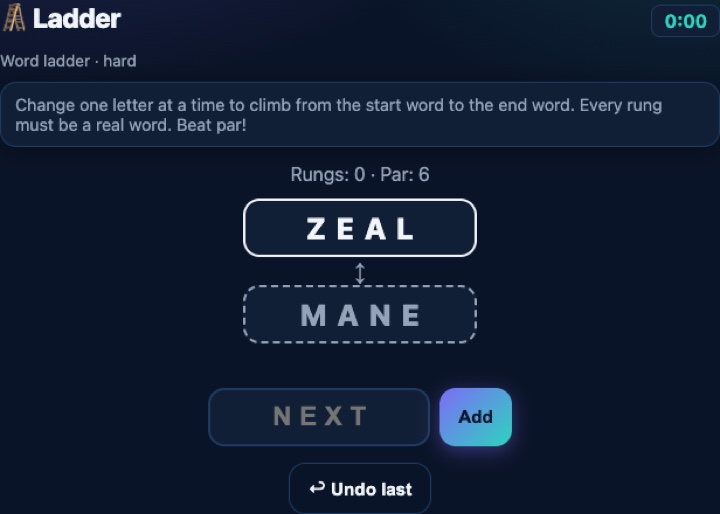
Read the start and target above the ladder. Type a word of the same length as the current rung and choose Add. Exactly one position has to change. Keep every other letter in its place. The new word must be in the puzzle's dictionary, and once it is accepted it becomes the word you edit next. Reach the target word to finish. The displayed par gives you a rung count to aim for.
Follow a complete example
A short example is COLD → CORD → CARD → WARD → WARM. First the third letter changes, then the second, then the first, and finally the fourth. Compare those with CORD → CARD, where the position changes from O to A. If you instead submit COLD → CARD, both the second and third positions change. That jump would skip a required rung even though both are English words.
Longer ladders use the same rule. Read each new proposal side by side with the current word before submitting. Two words can sound similar while differing in more than one written position.
Search backward from a tough target
List a few words that are one change away from the target. If none looks reachable from your current word, try generating one more step back from the most flexible option. A word with common vowel and consonant combinations often has several neighbors. It gives you more ways to connect the two searches than a rare intermediate with only one obvious next step.
Allow a detour when a direct change spells nothing
A word can be only two letters away from the target while both possible one-letter shortcuts produce a nonword. In that case, change a different position to reach useful vocabulary first. You may need to change one slot twice before it reaches the target letter. Keep an eye on the remaining differences, then ask which legal move opens the largest choice of possible next words.
Fix the point where you got stuck
If you keep returning to the same two words, try changing a position you have been leaving fixed. An uncommon spelling family may have few neighbors, while another vowel pattern gives you more options. When a normal-looking word is rejected, verify the spelling and rung length first. The puzzle uses its own word list, so try a familiar alternative if the entry still fails. After solving, trace the route once more to see whether you found any two nonconsecutive rungs that are one letter apart. That shortcut idea can make the next puzzle easier.