
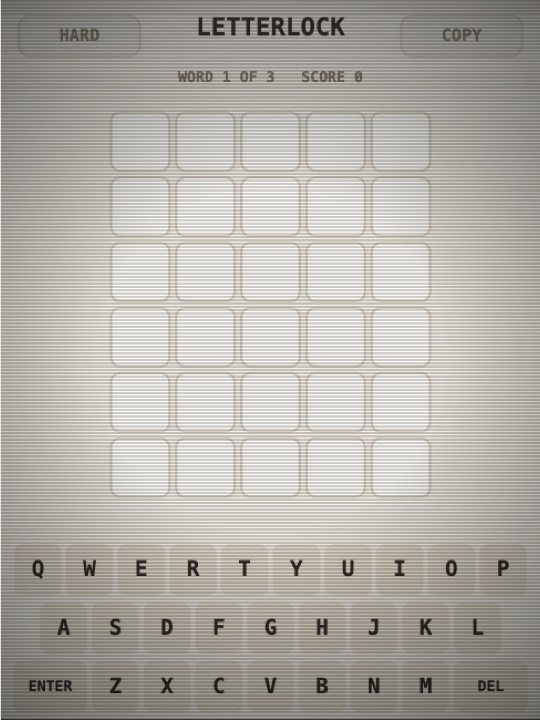
What a Letterlock run looks like
The first board starts with five empty positions. Enter a word and submit it to get a row of feedback. You have six guesses for each word, and there are three words in the daily set. On a computer, type your letters and press Enter. On a phone, use the keys beneath the grid. Check the row after tapping to make sure a letter registered before you send the guess.
Read one row as three kinds of evidence
A green letter fixes a position. An amber letter belongs in the answer and needs a different position. A gray tile tells you that an occurrence in your guess was left unmatched. Treat the position and the number of occurrences as separate questions. You might be certain there is a T while still having no idea whether it belongs near the beginning or end.
Imagine guessing LEVEL and getting a green L at the start and a gray L at the end. The gray tile tells you the second copy failed to match. The green tile still requires the word to begin with L. If you remember the result only as “gray L,” you throw away the strongest clue on the board.
Choose how to spend the next guess
Start with a real word that contains several different letters. Later, the best move depends on how much you already know. If only one candidate fits, try it. If several candidates share most of their letters, list the positions where they differ. An exploratory guess can help in standard play when it tests several of those possibilities at once. Follow the clue restrictions shown by the player when using hard mode.
Keep the clock from making the guess
At the end of a tight round, read the proposed word one character at a time. Check that the green letters stayed put and none of the amber letters went back into a rejected slot. This takes a few seconds and catches slips like typing a familiar plural that looks close on a small screen. The next board starts with a different answer, so leave the old letter deductions behind.
Make sense of a word you missed
Look for the row where the pool of possible answers stopped shrinking. A common cause is testing the same letters again without learning where they go. Another is committing to a familiar word ending before its final letter is confirmed. Identify which choice left you stuck, then try a different approach on the next board. The daily set is shared, so you can compare how many words you solved without giving away any of the letters.